



What Does Traction Control Do For Ford Vehicles?
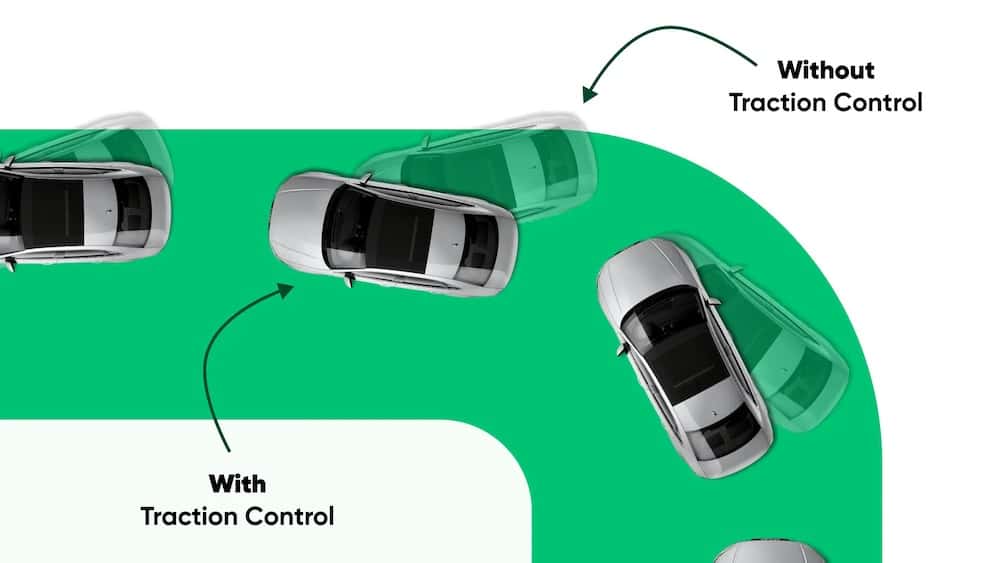
Photo Source/Copyright: Appraisal Engine
Picture a wet on-ramp, a little too much throttle, and a rear tire that wants to break loose. Then it just doesn’t. Most drivers never even notice the save. When a customer on the lot asks, “What does traction control do?” the honest answer is that it has probably stepped in a dozen times this month. In a Ford, that work happens inside AdvanceTrac.
Traction control keeps drive wheels from turning faster than pavement allows. It earns its keep pulling away from a light in the rain or creeping up a slick driveway in January.
Whether you drive front-wheel drive (FWD), rear-wheel drive (RWD), or all-wheel drive (AWD), it watches whichever wheels do the pulling. Nothing to press. Nothing to arm. The system runs automatically every time the vehicle starts, waiting on a tire to slip.
Ford treats traction control as one layer of AdvanceTrac, paired directly with electronic stability control:
- Traction Control: Catches forward drive-wheel spin under acceleration, braking the slipping wheel and trimming engine power.
- Electronic Stability Control: Detects sideways skids and slides, applying brakes automatically to keep the chassis in line.
When a wheel lets go, the entire sequence finishes before a foot can come off the gas:
- Sensors: Compare rotation across all four corners, flagging any drive wheel outrunning the rest.
- Targeted braking: Clamps the slipping wheel on its own without touching the others.
- Engine management: Trims torque until the tire bites again.
- Power hand-back: Restores full throttle the moment grip returns.
On dry pavement with decent tires, the system sits this one out. It reacts rather than guesses, never meddling with grip that already exists. A tire must slip first, on rain-slicked crosswalk paint, black ice under an overpass, or loose gravel on a county road.
Drive modes adjust that leash: slippery settings react sooner, while certain off-road modes back off because mud and ruts reward wheelspin.
For manual control, find the button showing a car with squiggly skid marks:
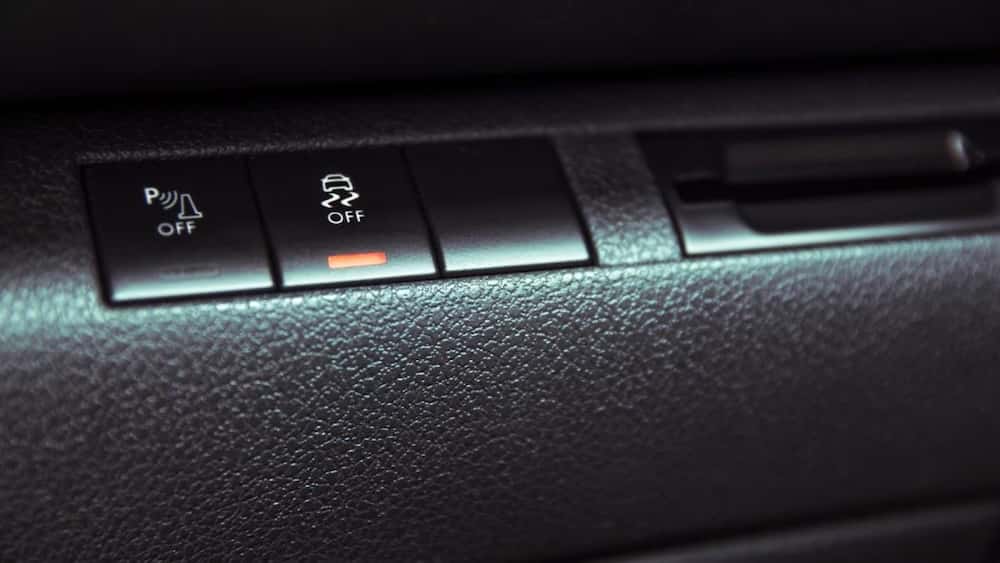
Photo Source/Copyright: Kelly Blue Book
Picture a wet on-ramp, a little too much throttle, and a rear tire that wants to break loose. Then it just doesn’t. Most drivers never even notice the save. When a customer on the lot asks, “What does traction control do?” the honest answer is that it has probably stepped in a dozen times this month. In a Ford, that work happens inside AdvanceTrac.
Traction control keeps drive wheels from turning faster than pavement allows. It earns its keep pulling away from a light in the rain or creeping up a slick driveway in January.
Whether you drive front-wheel drive (FWD), rear-wheel drive (RWD), or all-wheel drive (AWD), it watches whichever wheels do the pulling. Nothing to press. Nothing to arm. The system runs automatically every time the vehicle starts, waiting on a tire to slip.
Ford treats traction control as one layer of AdvanceTrac, paired directly with electronic stability control:
- Traction Control: Catches forward drive-wheel spin under acceleration, braking the slipping wheel and trimming engine power.
- Electronic Stability Control: Detects sideways skids and slides, applying brakes automatically to keep the chassis in line.
When a wheel lets go, the entire sequence finishes before a foot can come off the gas:
- Sensors: Compare rotation across all four corners, flagging any drive wheel outrunning the rest.
- Targeted braking: Clamps the slipping wheel on its own without touching the others.
- Engine management: Trims torque until the tire bites again.
- Power hand-back: Restores full throttle the moment grip returns.
On dry pavement with decent tires, the system sits this one out. It reacts rather than guesses, never meddling with grip that already exists. A tire must slip first, on rain-slicked crosswalk paint, black ice under an overpass, or loose gravel on a county road.
Drive modes adjust that leash: slippery settings react sooner, while certain off-road modes back off because mud and ruts reward wheelspin.
For manual control, find the button showing a car with squiggly skid marks:
- Quick press: Traction control shuts off, AdvanceTrac stays on, and the cluster confirms it.
- Press and hold: AdvanceTrac shuts off as well, returning full engine power.
- Press again: Everything switches back on.
Why would anybody want wheelspin? A vehicle buried in deep snow or soupy mud needs spinning tires to rock loose. Once you’re rolling, switch the system back on.
Traction control can’t invent grip out of thin air. It wrings every bit of traction from the rubber already on your wheels, amplifying good all-season or winter tires. Worn tread simply hands it less to work with. Great coach, but somebody still has to show up in the right cleats.
Frequently Asked Questions
Q: Is traction control the same as all-wheel drive?
A: Nope. All-wheel drive decides where torque goes. Traction control steps in when a wheel gets more power than it can use, braking that corner and trimming throttle. On an AWD Ford, both work the same slick road together.
Q: What does the flashing dash light mean?
A: A flashing light means the system is working right then. If a separate “Off” light stays lit, somebody pressed the button, and a stray elbow reaching for coffee definitely counts.
Q: Should I switch it off in snow?
A: Only when stuck. Leave it alone while driving down snowy roads. If you’re spinning in place at the end of an unplowed driveway, turn it off, rock free, then flip it right back on.
Want to feel AdvanceTrac at work without waiting on a storm? Swing by or book a test drive, and our team will show you where the button sits on the Ford you have your eye on.
More From Sunrise Ford
Compare All Three Ford F-150 Bed Dimensions
❮❯ ❮❯ ❮❯ Truck shoppers usually talk bed size in feet. Ford, on the other hand, talks in inches, and the gap between the two is where most of the confusion starts. A “6.5-foot” box isn’t exactly 78 inches on the nose, and the width that actually matters for loading drywall isn’t the one most…
Why Buy a Smooth Ford Hybrid Automatic?
Photo Source/Copyright: Ford (left) Edmunds (right) Here’s the thing many customers don’t realize when looking at Ford hybrids on the lot: “Do any of these come with a stick shift?” Short answer: nope. Ford hasn’t put a clutch pedal in a hybrid here, ever. If you’re shopping for a Ford hybrid automatic, you’ve…
Top Features of the Ford F-150 SuperCrew
Photo Source/Copyright: U.S. News Cars Four real, front-hinged doors and a back seat where full-grown adults won’t mind spending a three-hour drive: that’s the core pitch for the Ford F-150 SuperCrew, and for many truck buyers, it’s the entire conversation. If your vehicle needs to carry a crew to a dusty job site on…